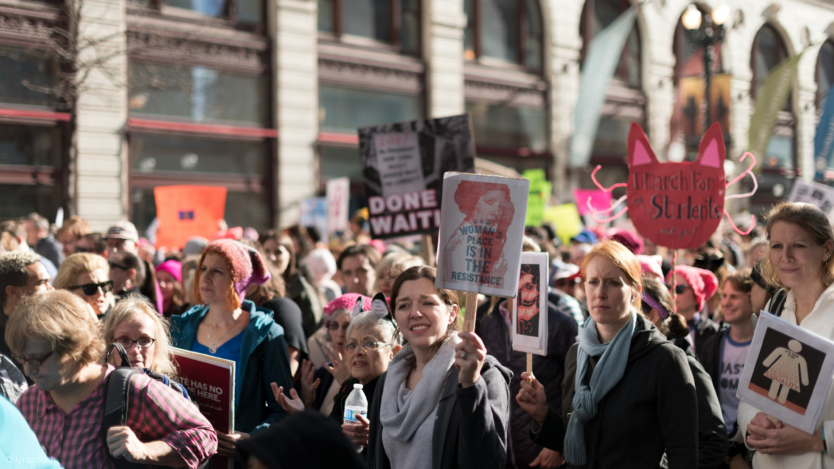
Beyond Beijing: Rethinking Women’s Political Participation is a research project implemented by the European Democracy Hub in partnership with Club de Madrid, exploring the global progress made in aiding women’s political participation since the adoption of the Beijing Declaration and Platform for Action in 1995. As part of this project, the European Democracy Hub interviewed Mari Kiviniemi, Prime Minister of Finland (2010–2011) and Club de Madrid Member.
What do you consider to be the most significant achievements in advancing women’s leadership over the past 30 years?
I would say the most significant achievement has been the normalisation of female leadership. Women’s leadership is no longer seen as a novelty. In my country, Finland, for example, the public now evaluates leaders primarily on competence rather than gender. The private sector, however, still lags behind compared with parliament, government, and the broader public sector, so there is still work to be done in that area.
Another key achievement has been the institutionalisation of gender equality policies. Finland’s Act on Equality between Women and Men has created a lasting framework, and gender equality planning is now mandatory across public institutions.
Finally, international visibility and impact have been important accomplishments. Finnish women leaders have played prominent roles on the global stage, contributing to discussions on peace, climate, and governance, and demonstrating the influence of female leadership internationally.
Could you share some examples of initiatives or policies from your tenure that you advocated for to improve women’s political participation?
When I was Minister of Public Administration and Local Government, I was able to foster gender mainstreaming in administrative reforms and leadership appointments, as well as pay equity, in my role as the government’s employer representative. I had broad responsibility for public sector employment policies and was directly in charge of setting the salaries of the highest-level civil servants. In this capacity, I paid particular attention to advancing equal pay, including at the senior leadership level.
I also worked to enhance gender equality in corporate governance. The Finnish corporate governance code for listed companies was amended to include a recommendation that both genders should be represented on company boards. At that time, in 2008, it was not yet mandatory, so creating a strong normative expectation required significant political effort. I had to use considerable influence to embed these expectations into legislation and the governance code, ensuring that gender equality became a central consideration in both public and corporate leadership.
Have you noticed any resistance to increasing women’s representation in leadership roles?
Yes, there are still a number of challenges. Work-life balance and societal expectations remain significant, particularly because persistent inequalities in care-giving responsibilities can limit women’s availability for leadership roles, especially demanding political positions. Bias also persists in recruitment and political culture, despite progress in formal networks. Unconscious bias continues to disadvantage women in party nomination processes and leadership selections.
Gender-based harassment remains another barrier. Women in politics face a disproportionate amount of online and offline harassment, which can act as a deterrent, particularly for younger candidates. Media portrayal also differs for women compared with men; female politicians are still more often evaluated based on appearance rather than competence. Financial barriers are also important. Running for office is expensive, and since women generally earn less than men, raising sufficient funds to stand for election can be a serious challenge.
What can the international democracy support community do to ensure gender equality progress is lasting and locally relevant?
I believe we need to continue the good work that international organisations have been implementing over the years and have confidence in what has already been achieved. We are living in challenging times, yet international organisations have largely managed to resist hostile forces and keep gender equality high on their agendas.
The Nordic countries should continue to act as front-runners, paving the way for others to follow. While developments in the United States are concerning, I am equally attentive to trends within the European Union, where some countries appear to be following similar approaches. I do, however, believe that this phase will eventually pass.
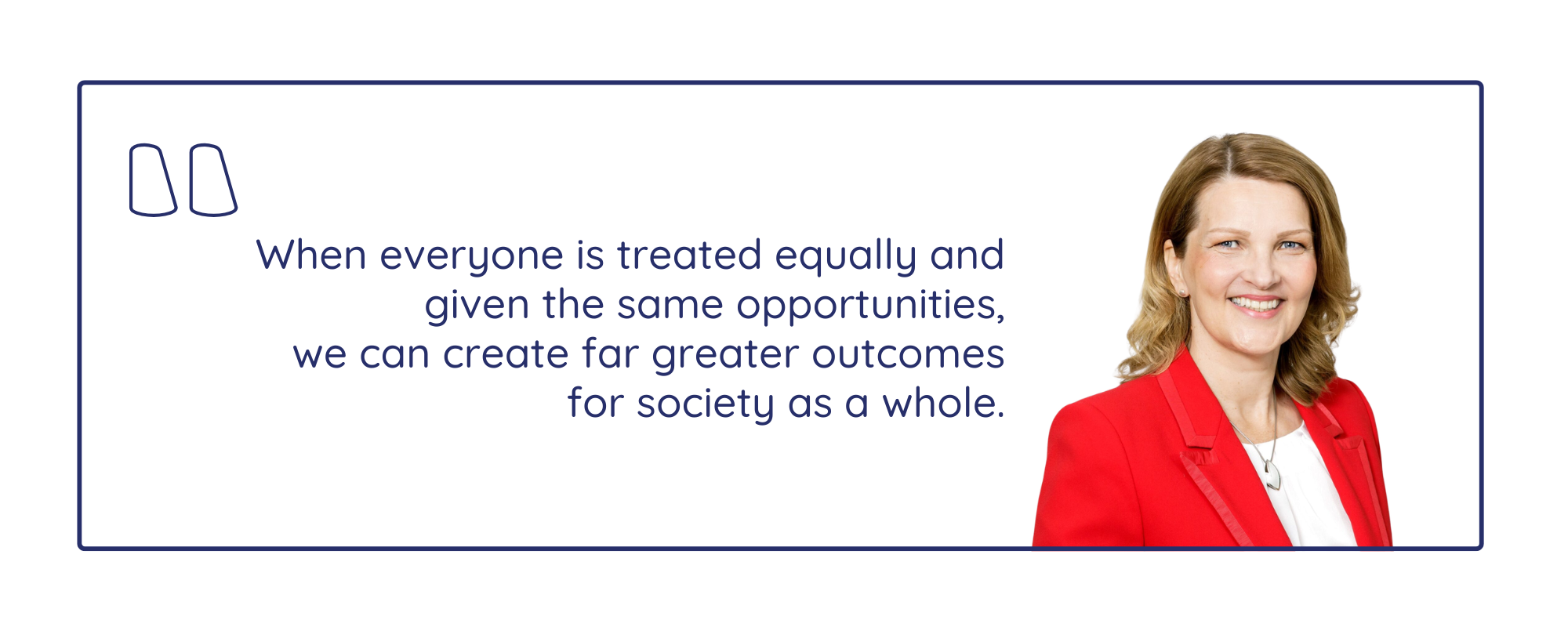
Ultimately, advancing gender equality is not only a matter of fairness between men and women—it is also about economic efficiency and societal progress. When everyone is treated equally and given the same opportunities, we can create far greater outcomes for society as a whole.
This interview was conducted with the financial support of Club de Madrid as part of the “Beyond Beijing: Rethinking Women’s Political Participation.”