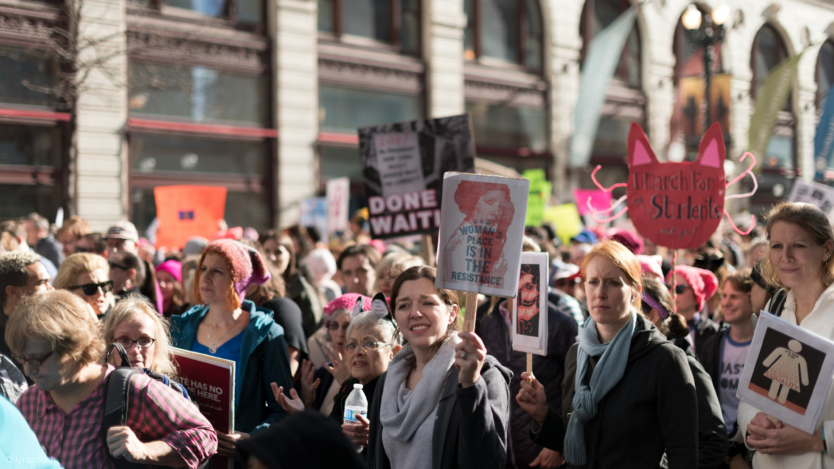
Beyond Beijing: Rethinking Women’s Political Participation is a research project implemented by the European Democracy Hub in partnership with Club de Madrid, exploring the global progress made in aiding women’s political participation since the adoption of the Beijing Declaration and Platform for Action in 1995. As part of this project, the European Democracy Hub interviewed Dame Jennifer Shipley, Prime Minister of New Zealand (1997–1999) and Member of Club de Madrid.
You led your country’s delegation to the 1995 Beijing Conference. What political momentum defined the event, and what lasting impact did it have on your work?
We all sensed a powerful political momentum that galvanised politicians to focus on gender equality and seriously address women’s issues. Despite the fact that New Zealand was undergoing significant economic reforms, our delegation to Beijing comprised over 80 people. At that time, we were also celebrating the centenary of women’s suffrage in New Zealand and reflecting on the progress made in advancing women into leadership roles. This momentum inspired many women to enter politics, and its effects were felt both during and immediately after the conference.
Shortly before the conference, New Zealand held a referendum on mixed-member proportional representation – a landmark reform that compelled all political parties to reconsider how they composed their candidate lists. Although New Zealand already had a relatively strong representation of women in parliament compared with other countries, this change paved the way to more equal political representation.
An important aspect of implementing reforms and driving progress is securing both budget and political commitment. We created the women’s ministry, which started as a small policy ministry but played a crucial role in gender mainstreaming. Other ministers had to consider budgetary implications and respond to questions raised by the ministry, which had a significant impact. I believe these kinds of structural thresholds bring discipline to public policy design and were certainly important. As prime minister, I was able to apply even more pressure.
In the 1990s, New Zealand evolved rapidly, and women’s issues became central to public policy. However, this did not mean the process was easy. There was considerable pushback and backlash, as gender equality was highly controversial. This was partly because we were in the midst of major economic reforms, and other priorities often pushed women’s issues aside.
What challenges do women face when entering politics and gaining the agency to effectively influence policymaking?
First, we are all focused on bringing in capable women who can lead in politics. That is the initial challenge. But once you enter politics, that’s when the real test begins – being able to influence policies and having the agency to drive change. In the 1980s, this was hard work: it meant doing more than just being part of politics; it required winning the confidence of your colleagues and earning their respect on an equal footing to deliver outcomes together. Often, male colleagues had different insights and competencies, so it took real courage to stand your ground, explain policy choices with facts, and gain their support.
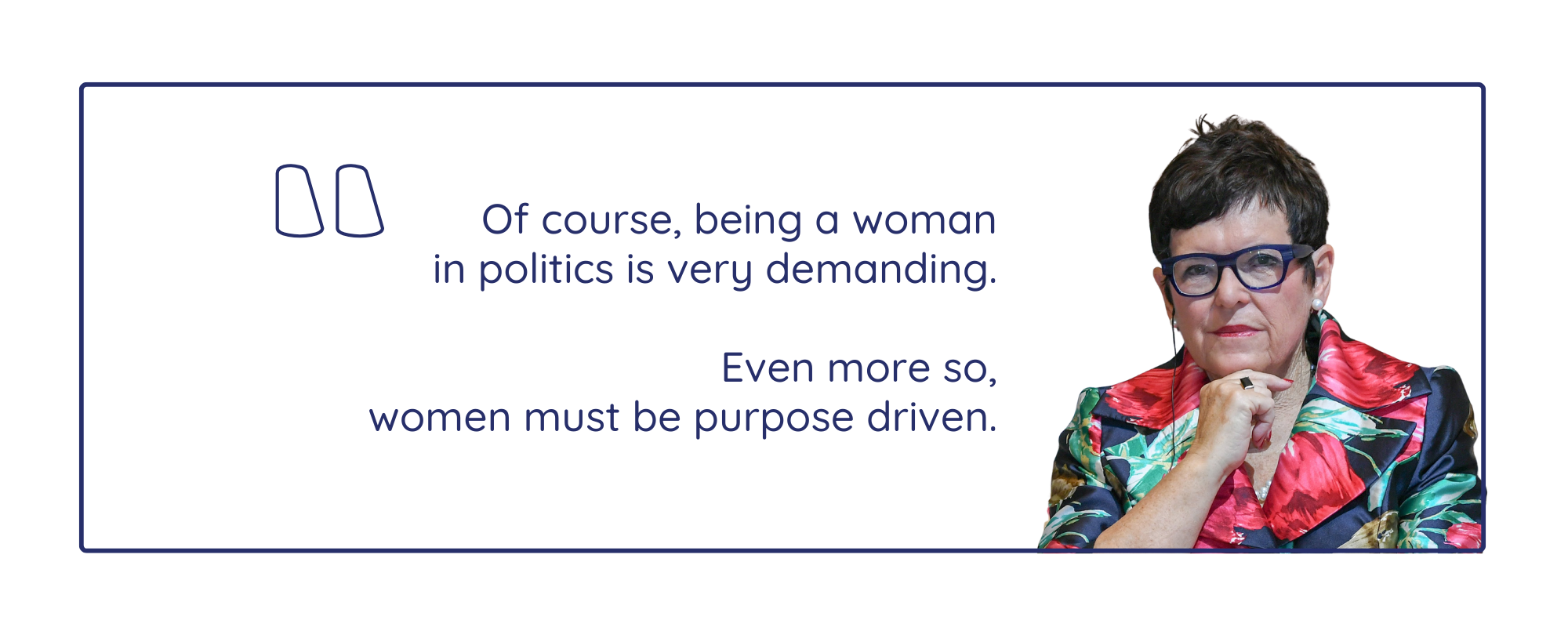
Of course, being a woman in politics is very demanding. Even more so, women must be purpose driven – understanding why they want to enter politics and having a strong sense of purpose that brings female and male colleagues together to set a framework, then an agenda, and finally the processes to create change. I think the key question is whether women truly want to do this – whether they have the appetite. I don’t believe this is purely a gender issue. Well, it is a gender issue to some extent, but our male colleagues face demanding choices and challenges. Honestly, I couldn’t say there were clear barriers that could not be overcome but it required real determination as to why you wanted to be part of the political process in seeking to shape the future.
What role do you think social media plays in the political careers of female leaders today?
Social media has become a cruel environment that often arrogantly tests a woman’s leadership, purpose, and intentions. As a result, many women are starting to question whether it’s worth it. My answer remains that it always is – but the environment is undeniably more hostile.
Even as a retired leader, I’ve noticed how social media is far more critical and swifter in its use of harsh language than the more deliberate verbal debates we had in parliament. Debates with male colleagues were very different from this new reality, where female politicians face criticism that often goes beyond politics or their professional competence. Big tech companies must take greater responsibility by developing self-regulation that prevent what is illegal offline from happening online – to avoid doing so is reckless and irresponsible especially because losing female leaders from politics poses a high risk for society as a whole.
How effective have international frameworks been in advancing gender equality globally, and what challenges remain?
We certainly have much more knowledge than before about the status of women, thanks in part to frameworks like the Convention on the Elimination of All Forms of Discrimination Against Women and other multilateral mechanisms that require countries to report on their progress. This process accelerated after the Beijing Conference, improving the quality of reports and the effort countries put into them. The way the UN shared these reports helped raise awareness and prompted leadership responses globally.
Yet, despite a growing international focus and increased resources for gender equality, the status of women and their lives in many countries remains unchanged – or, in some cases, has worsened due to the global political environment, including in political representation. This is partly because of deeply entrenched societal norms, culture, religion, traditions, and political swings, all which can be and are very powerful. Global mechanisms often struggle to effectively address these complex local and international realities.
This interview was conducted with the financial support of Club de Madrid as part of the “Beyond Beijing: Rethinking Women’s Political Participation.”