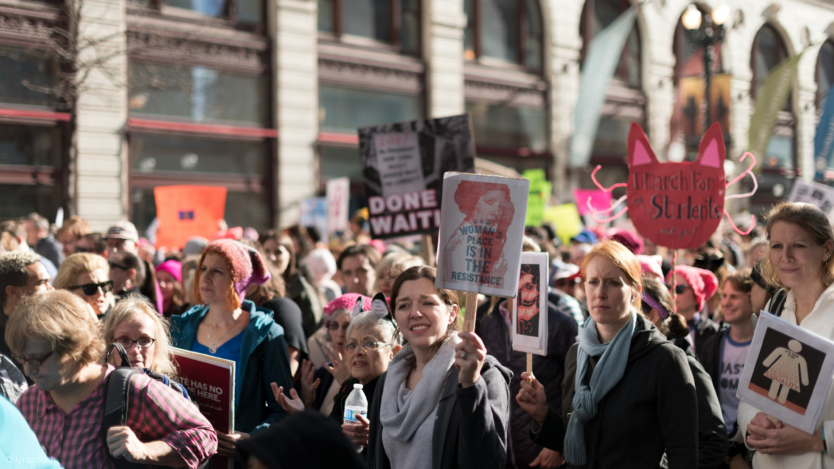
Beyond Beijing: Rethinking Women’s Political Participation is a research project implemented by the European Democracy Hub in partnership with Club de Madrid, exploring the global progress made in aiding women’s political participation since the adoption of the Beijing Declaration and Platform for Action in 1995. As part of this project, the European Democracy Hub interviewed Laura Chinchilla, President of Costa Rica (2010–2014) and President of Club de Madrid.
What do you consider to be the most significant achievement in advancing women’s political leadership over the past 30 years?
I would say that one of the most significant achievements has been the breaking of glass ceilings in many countries, particularly in terms of political representation. Latin America stands out as one of the most successful regions for women’s political participation. While there are still challenges in other sectors—such as economic participation and the persistence of gender-based violence—the progress in political representation offers a clear example of the positive impact of the Beijing Declaration.
When we look at the number of women in Congress, that is perhaps the most important indicator of success. Today, many countries have achieved gender parity in their legislatures, and in most, women hold at least 30% of seats. Only a few countries, such as Brazil and Guatemala, remain below 20%.
The story is slightly different at the level of heads of state. The period between 2010 and 2013 saw the highest number of women serving as presidents worldwide. Since then, that number has declined, which is a concerning trend. However, this does not negate the overall progress in parliamentary representation, so in a way, there is a kind of compensation between different levels of political leadership.
In Latin America, one explanation for the slower rise of women to head-of-state positions is the difficulty of being the first. The initial experience of leading in a traditionally male-dominated sphere requires enormous emotional resilience. It can be so challenging that many capable women decide to wait before taking that next step. In several countries, there were long gaps between the tenure of one female president and the emergence of the next.
Nevertheless, I am optimistic for the future. Younger generations of women entering politics receive a different message. They are inspired by those who have gone before them, and even if they are not yet ready to run for president, they are increasingly confident to engage in political life and build the pipeline for future leadership.
Do women face resistance in politics today and how should we address it?
There are two key phenomena influencing this issue. The first relates to cultural values and social norms, and the second concerns the use of social media to amplify political violence against women. When I first ran for office, social media existed in a much more limited and positive form. Today, its massive reach has contributed to a gradual increase in harassment and aggression targeting women in politics, and this is a factor we must take seriously.
On the issue of social values, existing UN Human Development Report shows that progress in favour of women is slowing. The surveys reveal that only about one in ten people are entirely free of prejudice against women. When analysing politics, economics, social attitudes, and violence, we see worrying trends: over 50% of respondents believe men make better political leaders than women, 40% believe men are better corporate leaders, and 25% still justify domestic violence. Comparing recent surveys with those conducted a few years ago shows little to no improvement.
This situation is compounded by the rise of polarised politics and aggressive discourse worldwide, which often celebrates strongmen as solutions to societal problems. Such narratives negatively impact the position of women and reinforce barriers to their political participation.
So how do we tackle this? When we examine other variables—laws, institutions, and formal policies—we see progress in women’s political participation. The sector where deterioration is most evident is in social values. This indicates that we must actively work to influence perceptions of women’s roles in society.
I believe the solution lies in strengthening policies across at least three areas. The first is the role of the family: children must grow up in environments that encourage equality, which can be complemented by state-funded early childhood care programmes that treat boys and girls equally. The second is education, which remains the most powerful instrument for socialising children to respect others and to internalise equality. The third is media—both traditional and social—which has a critical role in shaping cultural attitudes. Beyond policy, the broader cultural industry also has an essential part to play in challenging stereotypes and promoting equality. By focusing on these areas—family, education, and media—we can begin to address the backlash against women in politics and create a more supportive environment for gender equality.
ow effective have international and regional frameworks been in fostering and monitoring progress on gender equality?
I believe the multilateral system has played a critical role in advancing this agenda. It has, for example, provided indicators to monitor the progress of different nations, and it has offered a range of policies that can be compared across countries, allowing governments to adopt those most suitable for their cultural and practical contexts. Multilateral organisations have also accompanied many governments in implementing these policies. Overall, I would say the multilateral system has provided very positive leadership in this area.
One concern I have, which is not unique to the multilateral system but also arises at the national policy level, is that we have not always been effective in engaging men as allies in this work, with some notable exceptions. This left a space for those who sought to create backlash—those who framed women’s efforts as being against men or as attempting to displace them.
When analysing national elections in many democratic countries over the past decade, we can see that some candidates have gained traction by validating this kind of divisive discourse.
This highlights an area where we could have done more: to bring both women and men into the foundation of these efforts, helping them to understand and change behaviours that perpetuate inequality. It has not been easy for many, and we did not put as much effort as we could have into addressing this challenge.
In the current context, how can we make the case that gender equality should remain a top priority?
First of all, I want to start by recognising areas where we could have done better. There are urgent actions that need to be taken, particularly in relation to the United States, where there is currently very little support for gender rights. Just yesterday, the US published a classification of international organisations in three categories. The first category includes institutions with which the United States will continue to engage. The second includes organisations with which they will maintain some relationship, though funding may be uncertain. The third category, which includes UN Women, are those organisations the United States has decided to withdraw from entirely, providing no resources at all. The reasons for these decisions are clear, and in this case, we can only hope that in three years, a different administration might seek to restore funding and support.
In Europe, current priorities, particularly in relation to defence because of the conflict in Ukraine, have meant a temporary reallocation of resources. This may last five or six years or more, but it is a short-term challenge within a broader, long-term context. This moment provides an opportunity to rethink strategy and strengthen our approach. We need to bring more partners into the coalition, and the engagement of men will be critical in this effort. In the short term, securing resources to support gender rights will be difficult. However, we should think outside the box and focus on engaging global and local companies, as well as other parts of society that are sensitive to gender equality and want to contribute to global efforts to advance gender norms.
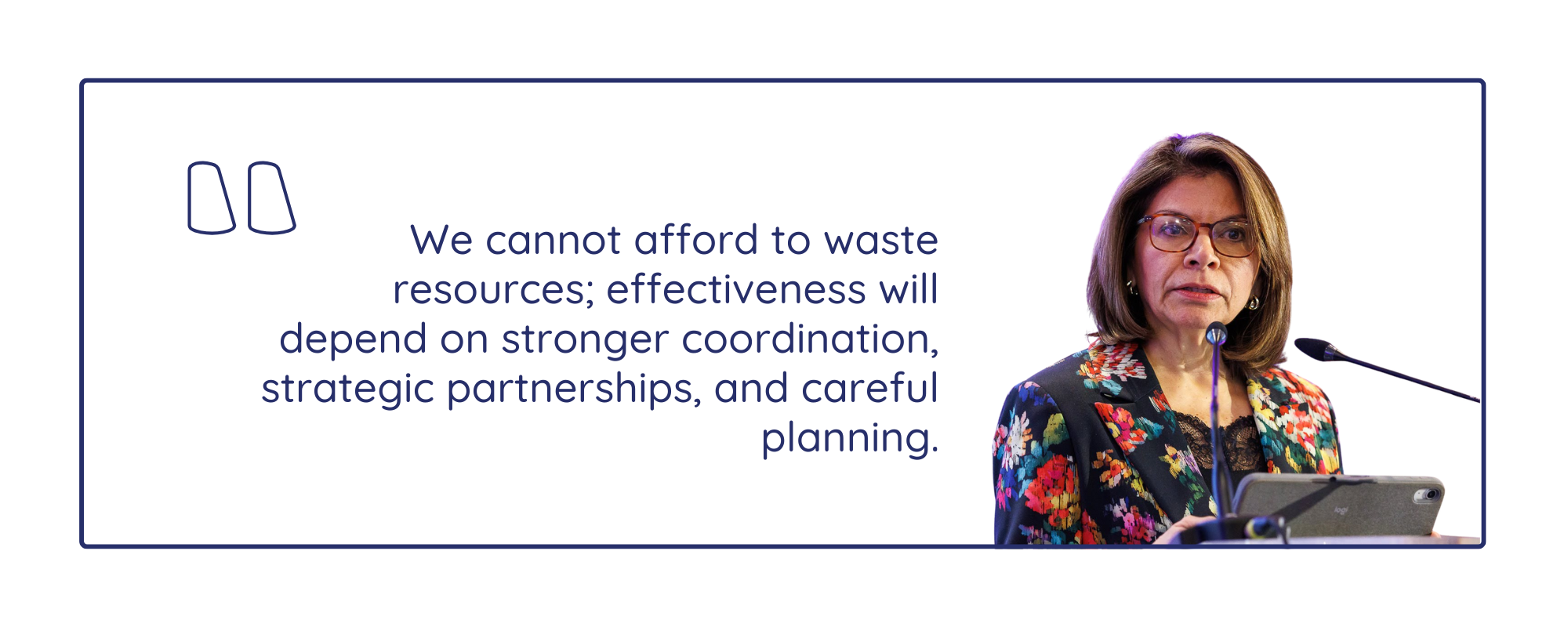
It is essential to build more strategic partnerships with civil society and the private sector to continue implementing these policies at the grassroots level. For international non-profit organisations, we need to define priorities more clearly and coordinate efforts to avoid duplication. We cannot afford to waste resources; effectiveness will depend on stronger coordination, strategic partnerships, and careful planning.
This interview was conducted with the financial support of Club de Madrid as part of the “Beyond Beijing: Rethinking Women’s Political Participation.”