Beyond Beijing: Rethinking Women’s Political Participation is a research project implemented by the European Democracy Hub in partnership with Club de Madrid, exploring the global progress made in aiding women’s political participation since the adoption of the Beijing Declaration and Platform for Action in 1995. As part of this project, the European Democracy Hub interviewed María Fernanda Espinosa, former Minister of Foreign Affairs of Ecuador, 73rd President of the United Nations General Assembly, and Advisor to Club de Madrid.
What do you consider to be the most significant achievement in advancing women’s political participation in the 30 years since the Beijing Conference?
There has been a long history of struggle for women’s rights and gender equality. The 1995 Beijing Conference was the most important and symbolic meeting, as it delivered the Beijing Platform for Action. However, we must also recall that the journey towards gender equality began earlier: the first UN conference on women took place in Mexico in 1975. The interval between these events allowed for continuous work to advance women’s rights and promote gender equality.
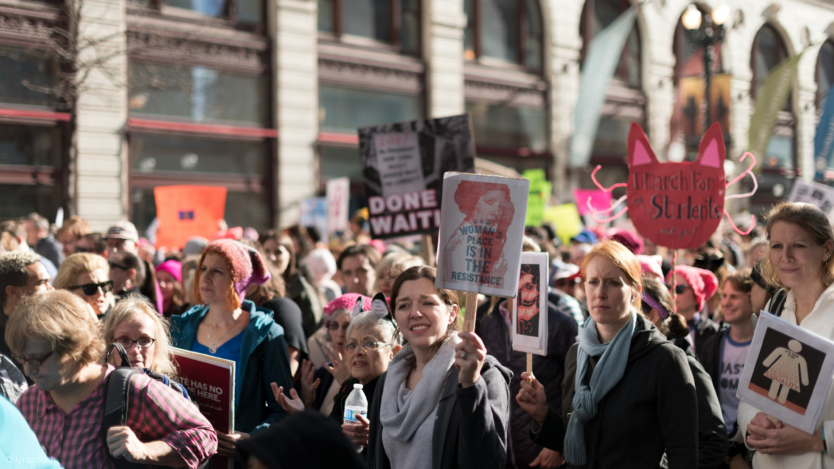
There is a long history that made the Beijing Conference possible. Women took to the streets in the 19th century to demand the right to vote. I believe we should reach a point where we no longer need to advocate for gender equality. There should be no need to call for a quota system, better representation, or campaigns to free women from all forms of violence and discrimination. Unfortunately, we have not yet achieved this.
When discussing progress since Beijing, I want to emphasize Generation Equality – a global movement launched by UN Women on the 25th anniversary of the Beijing Platform for Action to advance gender equality. The outcome of the Generation Equality Forum was the creation of six action coalitions focused on critical issues of the women’s rights agenda, including feminist movements and leadership. The beauty of the forum’s outcomes was the new form of multilateralism – not only did governments come together, but civil society organizations, the philanthropic and the private sectors joining forces to commit to a specific set of actions aimed at delivering game-changing results for girls and women.
How would you assess the existing monitoring mechanisms to measure progress towards gender equality?
Having proper legal and regulatory systems at the national level is extremely important for ensuring enforceability. However, the responsibility for implementation should not be solely in the hands of political leaders and governments; civil society must also be included, as it can play a significant role. Together with citizens, civil society can create an important accountability framework. The ownership of societies is vital, as they often play a key role in advancing policies, gathering data, and planning.
Another critical aspect is investment. We repeat over and over again, when speaking of the Sustainable Development Goals, that gender is a cross-cutting issue. It is not only about representation but also, for instance, climate adaptation and resilience building, especially since women are more likely to be affected by climate-related disasters. Yet, it is uncertain whether we are making adequate investments to support women in addressing these challenges. I believe there is still a significant gap between policy and implementation. The critical issue lies in the level of resources and investments needed for objectives to become a reality.
How have societal or cultural norms affected women’s ability to participate in decision-making?
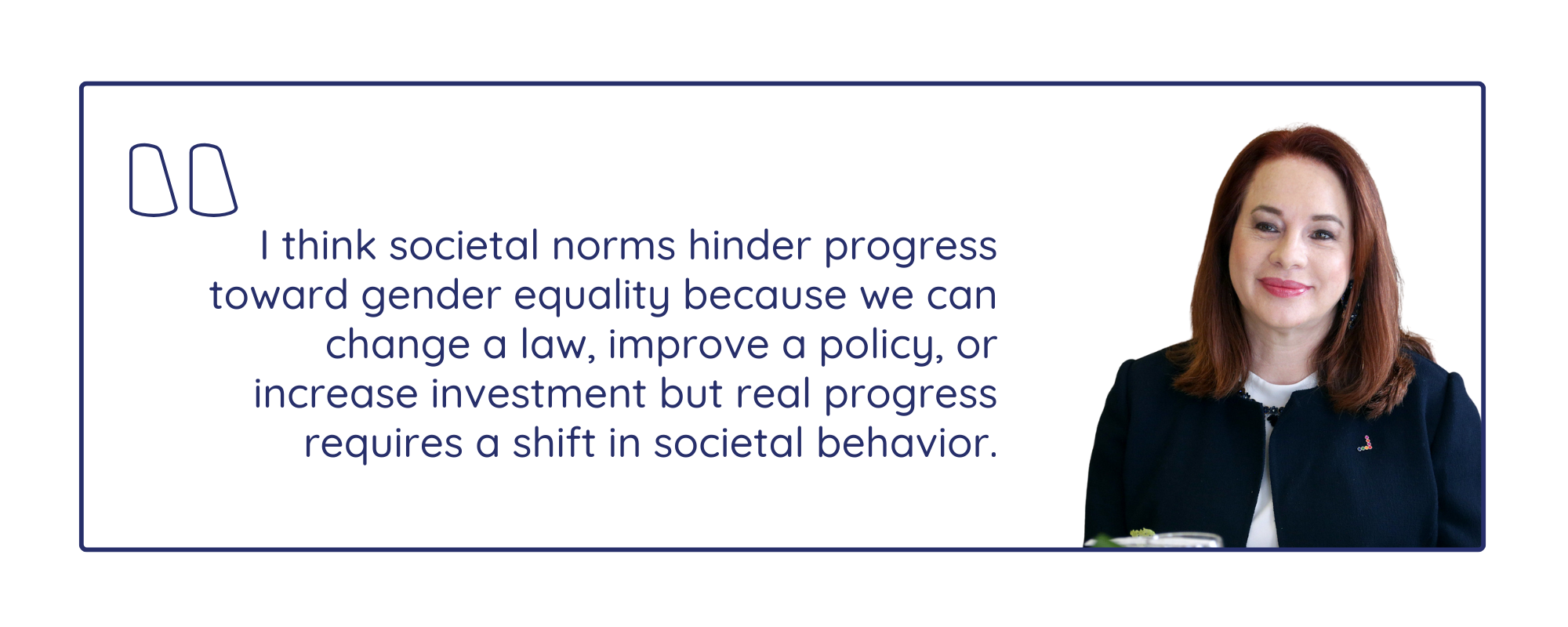
I think societal norms hinder progress toward gender equality because we can change a law, improve a policy, or increase investment but real progress requires a shift in societal behavior. If the collective mindset of a society continues to hold on to prejudice and toxic masculinity, it is extremely difficult to achieve equality.
In this regard, educating boys, both at school and at home, is crucial in changing norms that normalize discrimination and assign women predetermined roles, limiting their opportunities in the job market. Collective psychology is very difficult to tackle, and societal norms have led to the discrimination of women in many places, including Afghanistan, Iran, and elsewhere. But it should not be about norms; it should be about rights. The dignity of women and their fundamental right to live free from fear should be non-negotiable.
This interview was conducted with the financial support of Club de Madrid as part of the “Beyond Beijing: Rethinking Women’s Political Participation.”