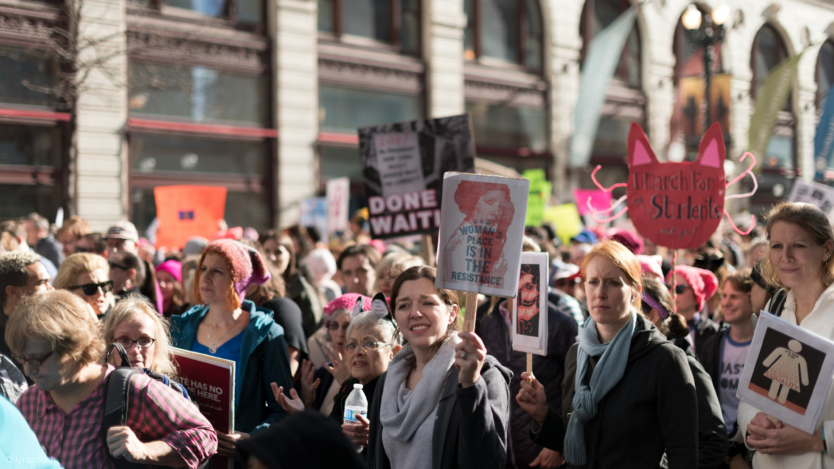
Beyond Beijing: Rethinking Women’s Political Participation is a research project implemented by the European Democracy Hub in partnership with Club de Madrid, exploring the global progress made in aiding women’s political participation since the adoption of the Beijing Declaration and Platform for Action in 1995. As part of this project, the European Democracy Hub interviewed Stefan Löfven, Prime Minister of Sweden (2014–2021) and Member of Club de Madrid.
Did a feminist foreign policy make a difference in fostering gender equality and women’s political empowerment?
When we formed the first feminist government in the world, the thinking behind the idea was precisely that: to have a structured vision for making a real difference in gender equality. To succeed in this endeavour, we had to be very determined but also structured and systematic, because otherwise there would be no visible outcomes. For this reason, we followed the framework of resources, representation, and rights in a structured manner. We made tangible progress; more women were able to take up office, participate in politics, and enter the labour market.
The most important aspect of feminist policymaking is distributing resources in an equal way. This is what we promoted by screening budgets and analysing each policy from a gender perspective. We discussed each ministry’s budget with the finance minister, and they were obliged to carry out a gender-based activity screening.
During your tenure, was there a political consensus about the need to foster gender equality?
Yes and no. Yes, in the sense that there was a broad consensus about the necessity of gender equality. But that doesn’t mean that everything we did was applauded by other political forces. There was a significant backlash and pushback from conservatives – not to mention the far right. We were heavily criticised for pursuing a feminist foreign policy, including by the Christian Democrats. We saw this opposition clearly once they became part of the coalition that formed the government in 2022. Sweden became the first country to officially recall its feminist foreign policy, despite having been the first to declare one.
Today, there is more awareness, more available information, and more statistics that show the importance of gender equality and its positive spillover effects in other policy areas. There are various feminist movements, both nationally and internationally, that advocate these changes. In particular, civil society actors and the media make a real difference in many countries in fostering gender equality and women’s political empowerment.
How would you describe the current political environment, and what impact, if any, has the digital sphere had on women pursuing political careers?
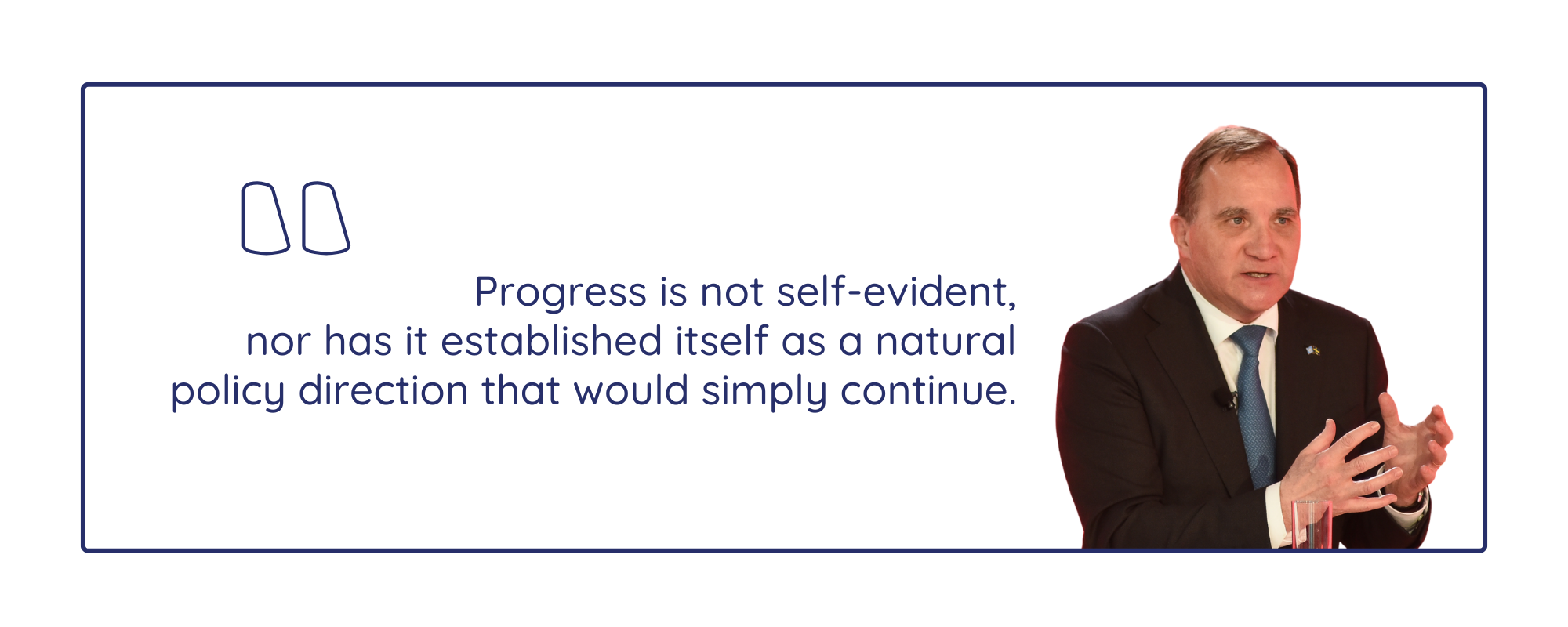
I am really concerned about this because I had hoped that once we started making progress, it would become easier for the next generation – and the generation after that – to move forward in the right direction. But we can see today that this is not the case. Progress is not self-evident, nor has it established itself as a natural policy direction that would simply continue.
I am concerned not only about social media but also, and especially, about how young women and girls experience it. They are often attacked online and face intense pressure to be perfect, which creates a huge burden. We should address this challenge in the same structured and systematic manner that we’ve discussed before. This issue needs to be brought into various fields across society so that everyone is involved in addressing it. We need to restructure, follow up, and take consistent action.
I believe one of the reasons we haven’t seen genuine progress is because we haven’t been thorough enough. We make decisions and agree on them at the global level, but then it’s up to each of us to follow through systematically. There should be a global standard to ensure consistency and accountability.
This interview was conducted with the financial support of Club de Madrid as part of the “Beyond Beijing: Rethinking Women’s Political Participation.”