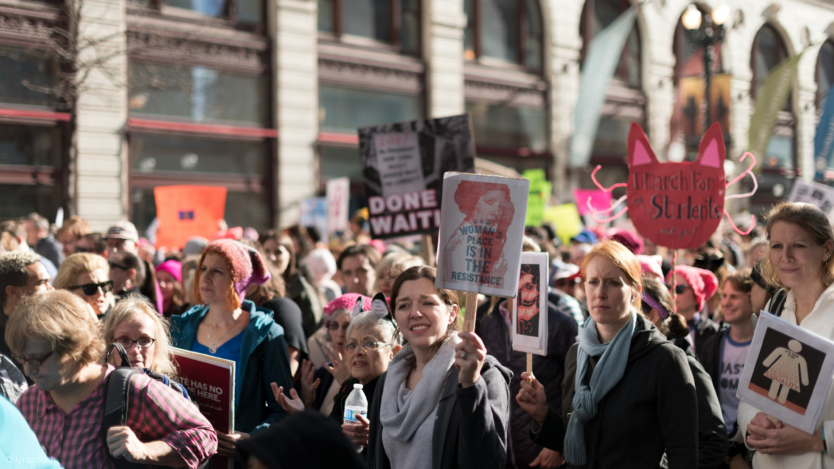
Beyond Beijing: Rethinking Women’s Political Participation is a research project implemented by the European Democracy Hub in partnership with Club de Madrid, exploring the global progress made in aiding women’s political participation since the adoption of the Beijing Declaration and Platform for Action in 1995. As part of this project, the European Democracy Hub interviewed Susana Malcorra, President and Co-Founder of GWL Voices and Advisor to Club de Madrid.
As a former foreign minister of Argentina, how would you assess your country’s progress since the 1995 Beijing Conference? What have been the key challenges for women’s political participation?
Argentina has been one of the leading countries in women’s empowerment and political participation. The quota system established in Argentina was a pioneering initiative in the region, and the country has had two female presidents in its history. Thanks to quotas, women’s political participation at all levels has been significant. The success of the quota system is a clear example of how principles enshrined in the Beijing Platform for Action have been implemented.
Argentina was also particularly vocal in multilateral discussions – until recently. When the new government took office in 2023, it immediately dismantled all the infrastructure related to women in the government, including the ministry and the entire apparatus that had been built to support women’s and minority issues. Now, the government is attempting to distance itself from all international agreements relating to gender equality and women’s empowerment.
Argentina is a good example of how a country can advance gender equality and make progress at the national level on issues that have been agreed multilaterally, and of how quickly those policies can be reversed. This demonstrates that we cannot take progress for granted and that the quest for women’s empowerment, rights, leadership, and political participation is a long one that remains unresolved globally.
Have you observed a conservative backlash or resistance, either in Argentina or globally, towards the increasing presence of women in leadership?
I don’t think cultural backlash is a challenge only at the national level. There is a powerful conservative movement that positions women’s rights at a crossroads with family rights. This movement places family and traditional values at its core and perceives the women’s rights movement as a threat. I believe there is a hostile reaction to the women’s rights movement globally, and gender minorities are often associated with women. Some conservative movements are also attempting to frame women’s rights as minority rights, using this as a pretext to divert attention and undermine the women’s rights agenda.
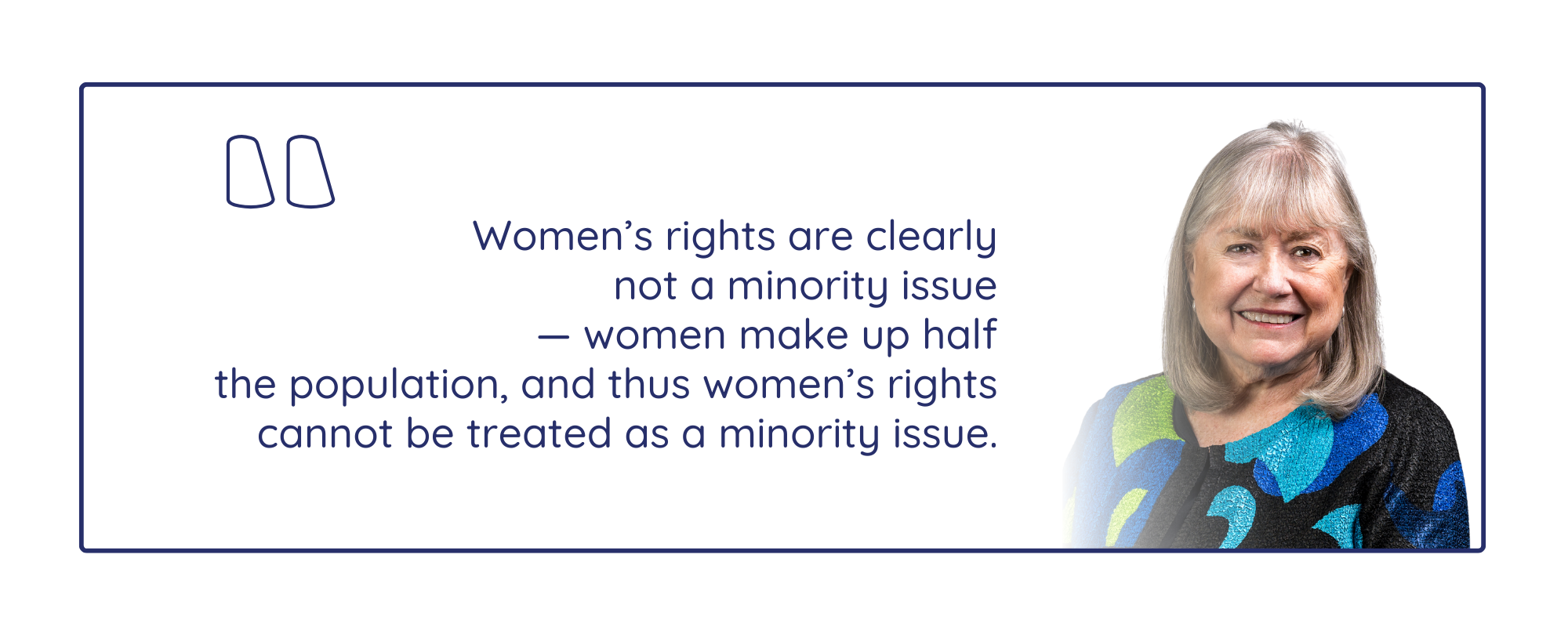
While the issue of gender minorities is certainly important, women’s rights are clearly not a minority issue. I am certain that if we fail to address these rights, gender minorities stand no chance. Conservative groups, whether deliberately or inadvertently, conflate these two issues, and we must make a concerted effort to distinguish them. Both are crucial for democracy, but we must not forget that women make up half the population, and thus women’s rights cannot be treated as a minority issue.
In its 80-year history, the UN has not yet had a female Secretary-General. How do you view this in relation to the organisation’s efforts on gender equality in leadership?
Very poorly, but I think it goes beyond that. All multilateral institutions are being questioned by citizens these days; there is clearly a trust issue. I believe we need a different way to manage these institutions, a new approach. And what better way to achieve this than having a female leader? This would reflect positively; the UN would become a role model for many. I think it would be energising, particularly for young people, especially young women, and it would offer the opportunity to rebuild trust.
In 2016, I competed for the post of UN secretary general, and we all assumed that after 70 years of the organisation’s existence, it was high time for a woman to hold the role. There were seven female candidates from different profiles and backgrounds, all very resourceful and serious contenders. In total, seven women and six men competed – and in the end, it was a man who was chosen. Of course, António Guterres was a deserving candidate with many qualities and expertise. The only thing he lacked was that he wasn’t a woman, which we had all hoped for from the UN as a step forward in showing its commitment to gender equality.
Could you share some information about GWL Voices? What is the objective of the organisation?
Following the UN secretary general election, three female candidates who had competed for the role – Helen Clark, Irina Bokova, and I – came together and began discussing what we could do to highlight the challenges linked to the global commitment to gender equality. We decided to establish something that would connect us with multilateral governance. It took us some time, but we launched GWL Voices to strengthen global governance through the lens of women. The organisation is almost six years old now, and we have grown to nearly 80 members across the world.
We cover diverse issues linked to gender equality and women’s political participation, but what really distinguishes us is our Women in Multilateralism Report, which shows the significant gap in women’s participation across various multilateral systems. We reviewed 54 organisations, and women in leadership positions account for only 14% of the total. Another striking statistic is that in 79 years, only four women have served as presidents of the UN General Assembly. We are trying to demonstrate, through data and figures, that even in organisations that advocate gender equality, we are still falling short of our benchmarks.
This interview was conducted with the financial support of Club de Madrid as part of the “Beyond Beijing: Rethinking Women’s Political Participation.”