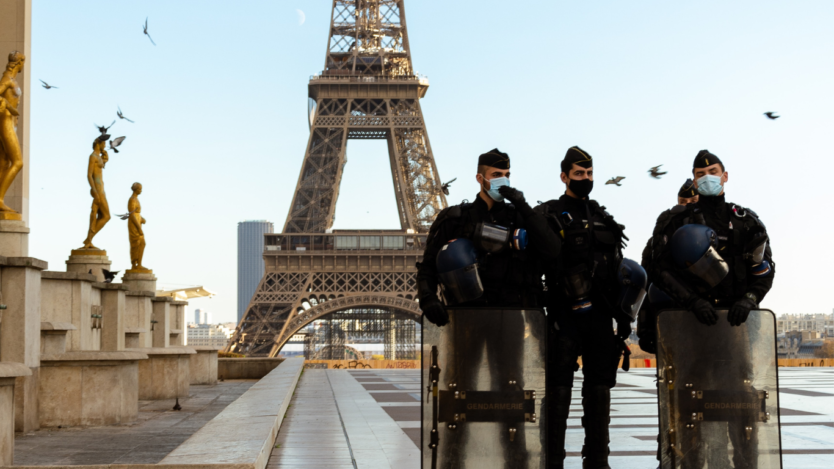
Many have described 2025 as the year of Gen Z protests. Across continents, citizens took to the streets to demand greater accountability, challenge deepening socioeconomic inequality, or express solidarity with people affected by wars in Ukraine and Gaza. While some protests were episodic and issue-specific, others evolved into sustained movements that continued into 2026, and some re-emerged with a different focus. Whether they will produce lasting institutional changes remains an open question, but these mobilisations reveal a series of emerging patterns in participation, organisation, and transnational influence.
The year 2025 was marked by a rise in protests around the world, with more than 70 countries experiencing some form of unrest. As these protests attracted so much attention, it is important to ask how far their spirit and momentum have carried on into 2026. Significantly, some of these movements have persisted or resurfaced this year. This suggests an underlying protest wave shaped by transnational dynamics rather than simply sporadic and fleeting individual protest events.

Throughout 2025, demonstrations took place across Europe, Africa, Asia, and Latin America. Some of these were a continuation of civic and political uprisings that had started in 2024; others emerged in response to controversies surrounding elections or a lack of government accountability, or in solidarity against the wars in Ukraine and Gaza. While some protest movements were isolated reactions to local political issues, others built transnational linkages, shared tactics, and amplified each other’s messages, showcasing the global nature of protests.
Among these trends, a new pattern emerged: the rise of youth-led or Gen Z protests. In Europe, this was most visible in Serbia and Slovakia, where Gen Z was the primary mobilising force. Beyond Europe, youth-driven protests were far more prevalent, taking place in Indonesia, Mali, Mexico, Nepal, and elsewhere, building on momentum first seen in 2024 with movements in Bangladesh and Kenya. Some of these protest movements even resulted in the ouster of authoritarian regimes. This new wave of protests underscores Gen Z’s growing role as a global political actor. Trends into 2026 suggest that this phenomenon is set to continue and that 2025 is unlikely to have been an exceptional year of mobilisation.
Protests in the EU
A series of demonstrations began in 2025 against perceived government failings in several EU countries. While many of these protests were episodic, some continued into 2026, notably in Greece and Slovakia, while others re-emerged in both 2025 and 2026, reflecting more persistent patterns of political contestation, as in France and Romania. Taken together, these trajectories suggest that protests in the EU are not confined to isolated episodes but form part of a more enduring pattern of political mobilisation. These movements emerged in a political climate in which new laws treated protests as a “nuisance” or “threat” and political leaders, as well as other powerful figures, poured fuel on the fire with stigmatising anti-protest rhetoric.
National trends
In February 2025, on the second anniversary of a devastating train crash, protests in Greece expressed outrage at the government’s lack of oversight and demanded accountability for its handling of the investigation into the incident; many accused the government of interference. This movement continued into 2026, with demonstrations marking the third anniversary of the crash. Ongoing legal proceedings in Greece have kept the case at the centre of public attention, while previous EU-led investigations have highlighted irregularities that could have prevented the crash and resulted in charges against 23 suspects, which Greece needs to act on. Together, these developments underscore how failures to provide accountability continue to drive protest mobilisation.
Infringements on political rights also resulted in citizens mobilising against their governments. In spring 2025, Hungary’s proposed law to ban the country’s annual LGBTQ+ Pride march sparked a wave of protests in Budapest. European Commission President Ursula von der Leyen issued a statement expressing solidarity with Budapest Pride and the LGBTQ+ community. In a rare statement of solidarity, European Commissioner for Equality, Preparedness, and Crisis Management Hadja Lahbib and 70 members of the European Parliament travelled to Hungary to join the protest. The government then moved forward with banning Pride on the basis that it could violate the country’s child-protection law, which prohibits any portrayal of same-sex relationships to minors; the commission condemned the new law.
Protests also targeted the Hungarian government’s failure to tackle allegations of abuse in state-operated facilities under the administration of former Prime Minister Viktor Orbán. Orbán’s main political challenger, Péter Magyar, increasingly harnessed the protest spirit, and this helped his party win power in Hungary’s April 2026 parliamentary election.
In January 2025, under the banner “We Are Europe”, a wave of protests emerged in Slovakia to oppose populist Prime Minister Robert Fico’s shift towards Russia. Particular concerns were raised over Slovakia’s energy dependence and divergence from the EU on foreign policy. Protests continued after the government proposed a draft law that would target NGOs, which, coupled with Fico’s celebration of the dismantling of the US Agency for International Development (USAID), instigated fears of a Russia-style crackdown on civil society.
Student protests against Fico and his government have been increasing. Commemorations of the 1989 Velvet Revolution turned into anti-Fico rallies. These student protests were dubbed the “Chalk Revolution” as students took to writing antigovernment slogans in chalk on the pavements of Slovakian cities. These protests continued in 2026, with the latest being a series of demonstrations in April against Fico’s plans to scrap postal voting for citizens abroad.
Romania has been undergoing a turbulent political period, marked by concerns over electoral integrity and discontent over the country’s democratic backsliding and economic austerity measures. Demonstrations erupted in March 2025 when far-right populist Călin Georgescu was barred from running in that year’s presidential election. Georgescu had gained momentum in the lead-up to the December 2024 presidential election, which was cancelled because of allegations of Russian interference. Georgescu labelled the cancellation an attack on Romanian democracy and encouraged his supporters to mobilise, resulting in a few far-right demonstrations in Bucharest, which, in turn, sparked a countermovement of pro-EU protests.
While the election-related protests died out after the 2025 vote, new protests emerged at the end of the year amid revelations from investigative reporting outlets of irregularities and potential abuses of power in the justice system. This was followed by trade union–led demonstrations against austerity measures in the education sector as well as protests by some public institutions. A motion for a vote of no confidence triggered a series of pro-EU demonstrations in support of Romanian Prime Minister Ilie Bolojan, pushing the country into a deeper political crisis.
Similarly, there were small protests in France when far-right leader Marine Le Pen was barred from running in the country’s 2027 presidential election for being convicted of embezzlement – a conviction she claimed was politically motivated. This was followed by counterprotests led by centre and left parties. Le Pen’s National Rally party called for a nationwide demonstration under the banner “Save Democracy”, but the event failed to transform into a large-scale mobilisation; it more closely resembled a rally of party members and supporters.
Le Pen submitted a request to the European Court of Human Rights to examine the verdict of the French courts, but the European court rejected the request. Experts are divided on whether the courts should be used to bar far-right leaders from running in elections. In 2026, far-right protests continued after the death of a nationalist activist during clashes between far-right activists and far-left groups. This prompted counter-demonstrations from left-wing groups, underscoring the tense dynamics in French politics ahead of the 2027 election.
Poland has seen some episodic protests throughout this period. In July 2025, anti-immigration protests erupted in more than 80 cities. Organised by the far-right Confederation party, the protests demanded stricter border controls, including the closure of Poland’s borders with Belarus, Lithuania, Slovakia, and Ukraine. The rallies sparked counterprotests in several cities, where participants defended refugees and the right to asylum, leading to occasional clashes that required police intervention.
Belarus’s President Alexander Lukashenko has also weaponised his country’s border with Poland, including by using it to send an influx of migrants into the EU, creating tensions in Poland and beyond. The EU supported Poland in securing the frontier, even by controversially agreeing to suspend protection for asylum seekers who cross the border into the EU.
Bulgaria experienced large-scale demonstrations in 2025 – a symptom of more prolonged political instability that ultimately prompted a new parliamentary election in April 2026 in an attempt to stabilise the political system. The protests emerged after the government’s 2026 budget proposals, which included higher taxes, increased social security contributions, and spending rises.
As with many other protests in 2025, corruption was one of the issues that led to these demonstrations. Bulgaria has long been grappling with corruption. Delyan Peevski, a Bulgarian politician and oligarch whose Movement for Rights and Freedoms (DPS) party has supported the minority coalition government, has been sanctioned under both US and UK anticorruption sanctions regimes. Protesters demanded the resignation of the government; after three weeks of protests, the government was toppled. The new election in April 2026 led to the party of former Bulgarian President Rumen Radev securing a parliamentary majority.
In Lithuania, protests emerged in late December in response to proposed changes to media legislation that would simplify the process of removing the director of the country’s national broadcaster. These demonstrations have continued in 2026 as a series of protests under the banner “Hands Off Free Speech”, with the latest mobilisation gathering more than 30,000 people.
Pro-democracy protests have continued to gain traction in 2026. Czechia saw a wave of antigovernment protests in March and April against the country’s new government led by populist Prime Minister Andrej Babiš. Thousands of Czech students protested in Prague against government plans to cut public media funding by scrapping licence fees, which could reduce budgets and threaten media independence. Protesters gathered in the city’s Letná Park carrying banners with the slogan “Let’s defend democracy”. These protests aligned with broader regional patterns of pro-democracy mobilisation and echoed movements seen in Slovakia and Lithuania since 2025.
Thematic trends
Economic grievances, particularly related to increases in the cost of living, continue to be major drivers of protest mobilisation in many contexts in 2026. In Croatia, union-led demonstrations took place in Zagreb to demand higher wages and pensions amid rising inflation and living costs. In Ireland, protests emerged after rapid increases in petrol and diesel prices. After these nationwide protests, the Irish government introduced fuel-support measures for certain workers and businesses.
A series of transnational protests also took place across Europe in 2025. Most notably, there was a proliferation of protests calling for a ceasefire in Gaza and an end to the genocide there. These movements – generally youth led – are part of a broader, transnational pro-Palestine and anti-war movement, which includes not only civic demonstrations but also boycotts, calls for the international community to recognise Palestinian statehood, and various petitions. These protests were met with mixed media coverage and even, in some cases, repression by European countries.
In the EU, these protests also called for the union to revise its relations with Israel, for example by suspending the EU-Israel Association Agreement or Israel’s involvement in the Horizon Europe funding programme for research. These demonstrations continued in 2026. A European Citizens’ Initiative calling for the association agreement to be fully suspended reached 1 million signatures in April 2026. Ireland, Slovenia, and Spain attempted to suspend the agreement, but the move was unsuccessful. There is growing pressure on the EU to take a firmer stance towards Israel, which shows that the continuous demonstrations are having an impact.
A separate wave of transnational anti-tourism protests took place mainly in southern Europe, motivated by the pressures of overtourism on local communities, governments’ failures to tackle these pressures, and the rising cost of living, often underpinned by a wider dissatisfaction with globalisation. While the EU has put forward a tourism policy, officials have not responded to this movement in any coordinated way. Similar demonstrations took place in 2024 and are likely to carry on in 2026 as the region continues to grapple with the impacts of overtourism.
Protests in the EU’s neighbourhood
Much as in the EU, most of the protests that took place in the union’s neighbourhood in 2025 were episodic, but a few have continued into 2026, most notably in Serbia, Georgia, and Türkiye. In January 2025, antigovernment protests rippled across the western Balkans – in Bosnia, Montenegro, North Macedonia, and Serbia – because of dissatisfaction with governments and the cost-of-living crisis, leading to mass boycotts of retail chains.
In 2025, Serbia saw its largest-ever demonstrations, sparked by a public outcry over the collapse of a canopy at the Novi Sad railway station. At the forefront of the protest movement were students. Even after they had forced the prime minister and his government to resign, the protests continued and continued to be met with, including through mass arrests, police violence, and the alleged use of a sonic cannon to dispel crowds, which the government denied.
Despite the oppressive environment and few concessions from the authorities, students continued to protest. They organised a mass bike ride to Strasbourg and a marathon run to Brussels to draw international support, alongside flash mob–style mobilisations and roadblocks in Serbia. To prevent pro-government forces from targeting individuals, the students organised themselves as a deliberately decentralised, leaderless movement. Students have shown no signs of stopping, continuing to protest in 2026 and demanding elections and an end to corruption. The Serbian protests show how a student-led mobilisation can evolve into a sustained, adaptive movement that reshapes domestic political dynamics through persistence, coordination, and tactical innovation.
In Georgia, citizens and civil society continue to struggle against increasing autocracy. Protesters have mobilised against the introduction of a repressive NGO law, electoral fraud, and the government’s ending of reforms linked to EU accession. While these protests had limited success in the country because of the oppressive nature of the regime, they prompted several responses from the EU and its members, including the suspension of funds and of the visa-free regime for holders of diplomatic passports. These protests, ongoing since 2024, have persisted into 2026, including an Easter march commemorating the 500th day of sustained mobilisation.
With the freedom of assembly curtailed in Belarus, the Belarusian diaspora led a protest in Poland in response to the 2025 presidential election, in which Lukashenko consolidated power through a seventh mandate. The Belarusian case highlights how under conditions of authoritarian constraint, protest dynamics can persist through externalised and diaspora-led forms of mobilisation.
Meanwhile, in Türkiye, demonstrations erupted in Istanbul in March 2025 when Mayor Ekrem İmamoğlu – seen as Turkish President Recep Tayyip Erdoğan’s main rival – was jailed for alleged corruption. Such political attacks are not uncommon in Türkiye, where, under Erdoğan, pro-democracy voices have been increasingly silenced and civic space closed because of government measures to weaken civil society and consolidate presidential power. Pro-democracy activists took to the streets chanting “Rights, law, justice” and demanding İmamoğlu’s release, resulting in the arrests of thousands of demonstrators and journalists.
The protest drew international attention from the EU, which urged the Turkish government to “uphold democratic values”. The demonstration also sparked a reaction from the Council of Europe, which announced that it would send a fact-finding mission to Türkiye over concerns of “democratic backsliding”. In March 2026, İmamoğlu’s supporters led a demonstration in Istanbul to mark the first anniversary of his arrest. Two other mayors, Mustafa Bozbey and Onursal Adıgüzel, were arrested in 2026, prompting a fresh wave of protests. These detentions were the latest in a series of arrests targeting mayors from the Republican People’s Party (CHP), which is part of the opposition.
In July 2025, large protests erupted in Ukraine against a parliamentary reform that would have weakened the independence of anticorruption bodies. These protests, combined with pressure from the EU, Germany, and France, led Ukrainian President Volodymyr Zelenskyy to reverse the reform law and restore the agencies’ independence. The Ukrainian case shows the resilience of the country’s civil society and its ability to mobilise despite the active war.
Protests further afield
Many of the protests that took place beyond Europe were youth led and part of what has been widely described as a wave of Gen Z protests. These demonstrations were organised primarily through social networks such as TikTok, Instagram, and Discord. Among the causes of these movements were governments’ corruption, inability to deliver public services, and lack of accountability, as well as deepening income inequality. Most of these protests started in 2025; some continued into 2026, while others have fizzled out or been replaced by new mobilisations sparked by different grievances.
Africa
Mass youth-led mobilisations started in Africa in 2024, gained prominence with Gen Z protests in Kenya, and consolidated into broader regional protests in 2025, with mobilisations in Morocco and Madagascar. These cases point to a systematic pattern of mobilisation in the region, driven by shared grievances of poor governance, economic inequality, and political exclusion.
In Kenya, a wave of Gen Z protests followed the death of a prominent blogger and teacher in police custody. The protests intensified because of widespread frustration over rising living costs, government corruption, and police brutality – including a lack of accountability for police violence during youth-led protests in 2024 that led to the deaths of 65 protesters.
As well as police brutality, several peaceful protests have been met with abductions, a ban on live media coverage, and a coordinated campaign to stifle dissent both online and offline, revealing deep fractures in the country’s democratic foundations. As a result, the CIVICUS Monitor Watchlist now rates Kenya as “repressed” – the second-worst rating a country can receive. In 2026, political turmoil continued, with a new wave of protests as a result of higher fuel prices because of the war in Iran.
In May 2025, protests emerged in Mali in response to the transitional government proposing a bill to dissolve political parties. The authorities arrested demonstrators and responded with violence, and human rights organisations reported a clampdown on civil society and activists. These were the first protests in Mali since the country’s 2020 military coup; since then, the military junta has turned towards Russia and ceased cooperation with many western donors. The junta had claimed that Mali would return to civilian rule in 2024, yet the authorities extended the junta leader’s presidency to five years and made the term renewable indefinitely without the need for an election. The situation in Mali is deteriorating rapidly, with ongoing conflict and instability, which could shrink the space for public demonstrations.
In late September 2025, Madagascar’s president dissolved the country’s government after massive youth-led protests. Originally triggered by acute shortages of water and electricity, the protests went on to demand more radical changes, including the dissolution of the election commission, the senate, and the top court. This prompted the French authorities to help Madagascar’s president quit the country, leaving behind a power vacuum. This move soon paved the way for a military coup, in which Colonel Michael Randrianirina seized power.
In March 2026, Randrianirina unexpectedly dissolved the government, dismissing the prime minister and the entire cabinet. Despite calls from international organisations for a road map for elections in September 2027 as a pathway to restoring civilian rule, Randrianirina appears to be consolidating power and sidelining the Gen Z movement that made his ascent to power possible. In April 2026, a series of Gen Z activists were arrested after protests calling for the administration to set an election date, deepening the divisions between the new government and the Gen Z movement.
At around the same time in Morocco, where the government had been prioritising sporting infrastructure over healthcare ahead of the 2030 FIFA World Cup, protesters united under the slogan “Stadiums are here, but where are the hospitals?”. The mass demonstrations led to the government shifting some of its 2026 spending plans by allocating $13 million to health and education and promising to create over 27,000 jobs in those sectors.
However, these measures were accompanied by a severe crackdown on protesters. According to reports, 2,400 people were arrested, 400 of whom were convicted, with sentences ranging from one to 15 years. This combination of a limited government response to the issues raised and heavy repression highlights both the potential impact of mobilisation and the high personal costs of dissent.
Asia
Asia is another region that experienced a series of protests in 2025. Some of these led governments to collapse, which meant their political consequences continued to unfold into early 2026, particularly where protests resulted in institutional transitions. Other demonstrations fizzled out or made way for new mobilisations.
Early 2025 saw continued turmoil in South Korea, which held a presidential election after the impeachment of former President Yoon Suk Yeol, who had declared martial law in December 2024. Young women were at the forefront of these protests, as a response to the growing anti-feminist rhetoric championed by Yoon. In April 2026, thousands of citizens took to the streets in Seoul to mark the first anniversary of Yoon’s ouster, with rival rallies celebrating and contesting the move, underscoring the deep polarisation in South Korea’s political landscape.
Indonesia has a rapidly growing economy, but this growth has left many behind, creating widespread discontent, which led to mass demonstrations in 2025. In August, young people protested against a housing allowance for members of parliament that was nearly ten times the minimum wage in Jakarta. The government responded violently, and a police crackdown led to the death of a delivery driver, causing widespread uproar and intensifying the protests.
In the Philippines, tens of thousands of people from across the political spectrum demonstrated in Manila over a flood-control corruption scandal. Protesters demanded the return of misused funds and the imprisonment of the perpetrators. The demonstrators were further angered by the police’s use of force and the arrests of fellow protesters. Protests continued in the country in 2026 over increased fuel costs spurred by the war in Iran.
In Nepal, the government was toppled after a series of youth-led demonstrations in September 2025, in which young people used Discord as a platform for political debate and decision-making. The EU took a cautious approach to these developments and did not offer an immediate response to the protests. Shortly afterwards, the EU released funding to support civil society, but only in modest amounts and in line with previously indicated allocations.
Some initiatives focused on supporting citizens in monitoring Nepal’s March 2026 general election. The country’s democratic future depends on the breadth and depth of possible reforms, but the election did deliver some gains for young people, particularly in the area of political representation. For example, the Rastriya Swatantra Party (RSP), which emerged from the election as the largest party in parliament, is led by Balendra Shah, who became Nepal’s youngest-ever prime minister at 35 years old. There has also been a gradual shift in the makeup of political parties. While traditional parties are still dominated by older candidates, this is not the case for newer parties; for example, 40% of the RSP’s parliamentary candidates were under the age of 40.
In the final days of 2025, anti-regime protests emerged in Iran over worsening economic conditions. This was the first large civic mobilisation in the country since 2023. That year’s Woman, Life, Freedom movement was violently suppressed by the Iranian regime, prompting sanctions from the EU under its Global Human Rights Sanctions Regime. The renewed protests were followed by a crackdown on protesters across the country, including widespread use of violence and internet shutdowns, with tensions and sporadic mobilisation continuing into early 2026.
Latin America
In 2025, a series of protests began in Latin American countries. These protests emerged either over concerns of electoral irregularities or as a result of economic grievances, as governments grappled with high economic inequality and poor economic performance. In some countries, notably Peru, Ecuador, and Venezuela, demonstrations carried on into 2026, but not necessarily as a continuation of the same movements seen the previous year.
In Peru, the announcement of a pension reform sparked a series of protests calling out corruption and dissatisfaction with the government; the organisers dubbed these demonstrations a “Gen Z march”. The government responded with a violent crackdown – police arbitrarily arrested and assaulted young people, intimidated journalists, and used tear gas and metal pellets – which it justified under the pretext of maintaining “public order”.
In 2026, protests continued, with demonstrations in Lima ahead of International Women’s Day on 8 March calling for the prevention of gender-based violence and respect for women’s rights. The country also saw protests after the April 2026 Peruvian general election, which was marked by a delay in the distribution of electoral materials to certain polling stations, leading to an extension of voting and a delay in the vote count. These issues were also raised by an EU-led election observation mission, which, however, characterised the election as “transparent and free of fraud”.
In Paraguay, hundreds of people demonstrated in Asunción in September under the slogan “We are the 99.9%”, echoing the slogan of the 2011 Occupy movement. The protests were preceded by a social media campaign that called for demonstrations against corruption, nepotism, and illicit influence in politics.
Bolivia saw a series of protests in 2025. In August, supporters of former President Evo Morales took to the streets as Bolivia’s constitutional court barred him from running in that month’s presidential election, citing constitutional term limits. Protests also emerged in December after the government moved to eliminate fuel subsidies. The reform was part of a package meant to end the economic crisis gripping the country, but it was not well received by the general public as it led to an increase in the cost of living.
A similar situation took place in Ecuador, where the Confederation of Indigenous Nationalities of Ecuador called for mass demonstrations after the removal of long-standing fuel subsidies. Clashes between the army and protesters took a violent turn, with 55 journalists reporting having been attacked. In 2026, antigovernment demonstrations continued, this time triggered by reports of a proposed labour reform that would increase working hours. Protesters also made broader demands for more investment in health and education, public-sector salary reform, and measures to address rising violence. Just as in 2025, these demonstrations were met with police brutality.
The 2025 general election in Honduras was followed by a series of protests over a delay in the vote count. The election, which was already tense, was further complicated by US President Donald Trump openly backing the conservative candidate, Nasry Asfura. A malfunction of the vote-counting system meant that 15% of the votes had to be counted by hand, delaying the final result. The EU-led mission to the country released a statement in support of the National Electoral Council and called on all candidates to respect the counting process. Previously, both the EU and the Organization of American States had criticised the delay in the vote count, but neither has raised concerns of possible systematic fraud.
Finally, Venezuela experienced a surge in protests after then President Nicolás Maduro’s 2026 removal by US forces. Protesters demanded the release of political prisoners and a response to the cost-of-living crisis. Over 2,000 demonstrators demanded higher wages and pensions in the biggest protests since 2024. While police clashed with protesters, the demonstrations showed that there has been a decrease in repression and that Venezuelans feel emboldened to mobilise publicly under the new administration. The interim government conceded to some of the protesters’ demands on wages and the release of some political prisoners.
Emerging patterns
Beyond their immediate political outcomes, the 2025–26 protests showcase a series of emerging patterns in participation, organisation, and transnational influence that are reshaping how protests take place in the digital era.
First, most of the protests put the spotlight on Gen Z and its active role in mobilising and taking political action, but in fact, most of these protests also mobilised diverse segments of the population. The few demonstrations of 2025 that resulted in overthrows of autocratic governments managed to do so by bringing together large demographic groups. This was the case in Nepal, Indonesia, and Madagascar. Some of these protests drew inspiration from successful youth-led protests in Bangladesh and Kenya, where intergenerational solidarity was evident. In Europe, opposition to autocratising regimes has also galvanised broad public support, as in Serbia and Slovakia.
These examples show that young people are not disconnected from mainstream politics and that their discontent with politics is felt across multiple generations. Issues of corruption and socioeconomic inequality do not only resonate with younger generations but cut across society as a whole, enabling the formation of broad-based coalitions in which young people act as key catalysts rather than isolated drivers of mobilisation.
At the same time, protest trajectories have shaped up in different ways. Across the cases discussed, three broad categories can be observed: protests that have continued into 2026, those that have dissipated but re-emerged with a different focus, and those that have petered out.
In the first category, notable examples include the wave of antigovernment and pro-democracy protests across Europe. Protests in Georgia have been ongoing with various degrees of intensity for more than a year. Movements in Serbia were initially dismissed as one-off demonstrations but have managed to endure and lead to shifting European attitudes towards the Serbian government. Slovakia’s Chalk Revolution is ongoing – standing as an example of silent resistance against Fico’s growing autocratisation efforts – as are pro-democracy movements in Lithuania and Czechia. Similarly, pro-Palestine and anti-war protests against the situation in Gaza have continued in Europe, despite European governments clamping down on such demonstrations. In Türkiye and Greece, protests emerged on the first anniversary of İmamoğlu’s arrest and the third anniversary of the February 2023 train crash, respectively.
Elsewhere, while earlier protest waves have subsided, new movements have emerged in response to similar underlying pressures. In Kenya and the Philippines, for instance, demonstrations linked to rising living costs have gained traction in 2026 as earlier protests have abated. While not direct continuations, these new protests point to persistent structural grievances that are yet to be resolved. Similar movements continue to appear in countries where social and economic grievances have previously sparked protests, as fuel shortages put pressure on the global economic system, as in Ireland and Croatia.
Meanwhile, other movements have petered out, either because of government clampdowns, reforms that have appeased the protesters, or a combination of the two – as in Morocco. In this category, Nepal emerges as the 2025 success story for the Gen Z–led movement, which resulted in institutional change through an election that ushered in the country’s youngest prime minister to date.
Another trend is the shared symbolism and messaging between protest movements around the globe. This is particularly prevalent in Asia. A key symbol that united Asia’s protest movements in 2025 was a skull-and-crossbones flag from the popular manga series One Piece, in which the protagonists fight for the liberation of oppressed people. The flag first emerged as a popular protest symbol in Indonesia and was later used in Nepal and the Philippines, echoing the 2020 wave of youth protests in Asia, such as the #MilkTeaAlliance, which were similarly united by pop-culture imagery.
Protest tactics are also adapting as digitisation has sped up information sharing, allowing activists around the world to connect and learn from one another how to better organise and use different tools. One movement that stands out as genuinely global is the solidarity movement for Palestine. While not formally united, it remains largely a grassroots movement with global support.
Demands for governance
Across the 2025–26 protest wave, mobilisation should not be understood primarily as a uniform push for democratic transformation. While some protest movements have been explicitly pro-democracy, it would be misleading to interpret this wave as a broad-based demand for democratisation. In many cases, mobilisation was driven less by calls for democracy and more by immediate grievances related to living conditions, corruption, and government accountability.
Clear pro-democracy movements did emerge in contexts where democratic backsliding had been most visible, such as Georgia, Serbia, Slovakia, and Türkiye, where protesters explicitly challenged and continue to challenge authoritarian practices, electoral manipulation, and restrictions on civic space. However, these cases represent only part of the broader picture. In places such as Indonesia, Ireland, Nepal, the Philippines, and the western Balkans, protests were rooted primarily in socioeconomic grievances, such as corruption, elite entrenchment, and economic woes. While not always framed in democratic terms, these grievances nonetheless reflect deeper dissatisfaction with governance structures and state responsiveness.
Overall, most of these movements demanded more effective and accountable governance structures that responded to their needs. These demands persist across movements that have continued into 2026 and recur in new mobilisations around the world. Whether they will produce lasting institutional change remains an open question, but the evidence of 2025 and 2026 suggests that the forces driving people onto the streets show no signs of abating.
Author
Evelyn Mantoiu is a Research and Data Manager at the European Partnership for Democracy, where she investigates European democracy support policies. She has a BA in International Relations and Politics and an MSc in Democracy and Comparative Politics.
This publication covers major protests that took place between January 2025 and April 2026.
This article was published as part of the WYDE Freedoms project, aimed at supporting young civil society actors across the globe in upholding and promoting the freedoms of assembly and association.
The project is part of the European Commission’s broader WYDE (Women and Youth Democratic Engagement) initiative which seeks to strengthen the rights and participation of youth and women in public and political life.

Photo credit: Nahmad Hassan, Pexels