
Contemporary authoritarianism is interscalar, and this matters for how we resist it.
Authoritarianism does not stop at national borders. Authoritarian ideas, practices, technologies, and policies spread through interactions between myriad state and non-state actors across different locations and scales. This makes for a geography of authoritarianism that is increasingly complex and that challenges taken-for-granted distinctions between the local, the national, and the transnational.
Illiberal and reactionary ideas, authoritarian practices, disinformation campaigns, intrusive surveillance technologies, and “anti-gender” policies that erode rights circulate across borders, and they are pushed and enabled by myriad actors (lone “influencers”, corporate actors, public officials…) operating across multiple, interacting scales. At the same time, democratic resistance also takes shape across and beyond state boundaries. Mayors, civic groups, think tanks, private companies and online influencers all play key roles in both advancing and resisting authoritarianism.
The ongoing global authoritarian surge is therefore neither simply the sum of distinct domestic processes, nor solely the effect of transnational forces. Interactions across different geographical scales constantly shape one another. Contemporary authoritarianism is an interscalar phenomenon.
So, how do these interactions work? How can authoritarian ecosystems be resisted and replaced by democratic ecosystems?
RESISTANCE: Resisting Interscalar Authoritarian Networks and Coalitions is a research project funded by the European Union under the Horizon Europe project. Bringing together 13 partners, RESISTANCE maps the networks of actors that shape autocratic appeal and democratic resistance coalitions, and develops tools to strengthen democratic defence.
Focus areas
RESISTANCE examines four interconnected manifestations of authoritarianism:
- IDEAS: Citizens in democratic countries are a key target of authoritarian narratives and ideas. Complex interscalar information networks shape these ideas and the ways citizens respond to them.
- INSTITUTIONS AND PRACTICES: Elected executives are often the main drivers of democratic backsliding and authoritarian rise. They embark on political projects to dismantle checks and balances and demonise and repress opposition. Yet, they don’t do this alone.
- TECHNOLOGIES: Surveillance technologies are being deployed across different regime types and contexts, while the growing power of Big Tech companies and the cross-border nature of digital repression make the rise of digital authoritarian practices a global challenge.
- POLICIES: So-called “anti-gender” politics is increasingly shaping policies across a multiplicity of contexts. This is driven by extensive policy networks of think tanks, churches, international organisations, transnational money flows, and local and national activists and politicians.
Eight site analysis
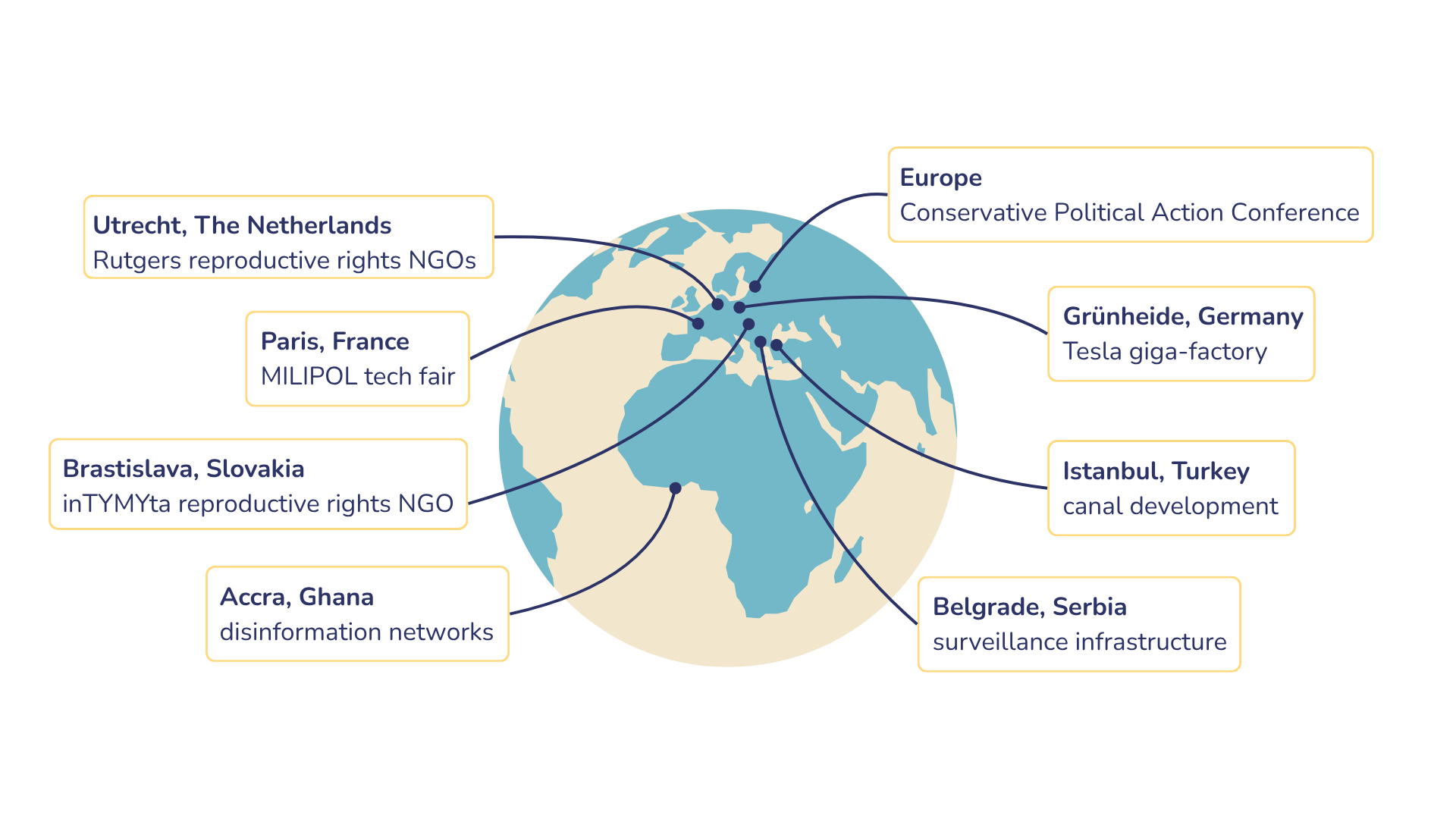
RESISTANCE analyses eight sites to understand how the interscalar networks and coalitions that shape and resist authoritarian ecosystems work in practice. This site-based approach allows us to build theory from the ground up and to devise responses that are grounded in real experience.
The project runs for three years from September 2026 to August 2029. It is funded by the European Union under Horizon Europe (GA#101286676).
To receive updates about RESISTANCE publications and events, subscribe to the RESISTANCE newsletter:
Contact
- Licia Cianetti, University of Birmingham: [email protected]
- Nicholas Cheeseman, University of Birmingham: [email protected]